24 years after the first twelve seconds
Spirit of St. Louis Ryan NYP
33½ hours alone over the Atlantic
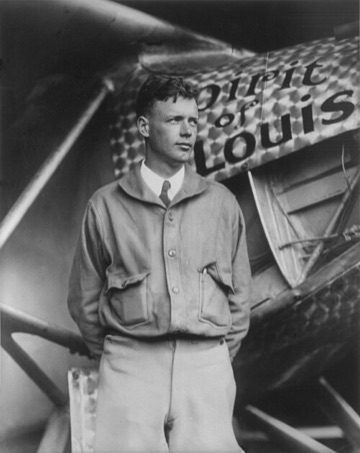
The story
had the fuel tank put in front of the cockpit, so he could not see straight ahead and used a periscope. He flew 5,800 km nonstop to and won the $25,000 .
Ryan Airlines in San Diego built it in about two months, from its M-2 mail plane with a longer wing and room for 450 US gallons of fuel. To save weight Lindbergh left out the radio and the parachute, and he navigated by compass, by and by the coastlines below. He had not slept the night before he left, and fought to stay awake for much of the crossing.
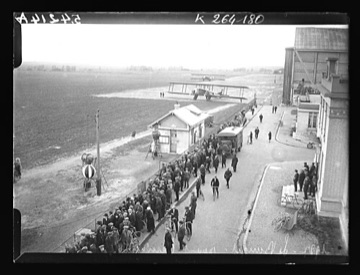
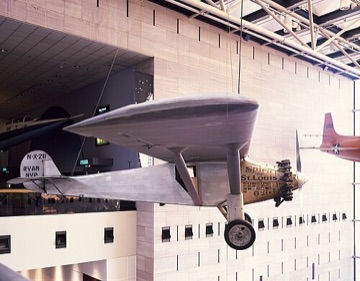
About 150,000 people were waiting at Le Bourget when he landed at 10:22 at night, Paris time. Back home he flew the Spirit to 82 cities in all 48 states, then gave it to the in 1928. It hangs in the National Air and Space Museum today.
How it works
Loading the 3D model…
Specifications
- Top speed
- 214 km/h
- Wingspan
- 14 m
- Max weight
- 2,330 kg
- Ceiling
- 4,975 m
- Range
- 6,600 km
- In 12 seconds
- 713 m
- Power
- 223 hp Wright J-5C Whirlwind
Where it flew
New York to Paris
Roosevelt Field, Long Island. Roosevelt Field closed in 1951; a shopping centre stands where Lindbergh took off. The simulator starts here, over today's ground and imagery of the place.
Fly it yourself
Take the Spirit of St. Louis up in 3D, with its real weight, wing area and power.
Get a fully fuelled aircraft off the ground. Lindbergh needed almost the whole field.
On displayNational Air and Space Museum, Washington, D.C.